
Haifa, Israel
February 24-27, 2014
Invited Speakers
Noam Tractinsky
Visual Aesthetics of Interactive Technologies
One of the defining characteristics of interactive technologies in the new millennium is the emergence of aesthetic considerations as a major factor in the development of systems and products. Following almost two decades of empirical research in this area we have now a better grasp of this trend and its potential effects on users and societal processes. This talk will open with a brief overview of my early encounters with this phenomenon and of early studies of visual aesthetics of interactive systems, emphasizing the findings regarding its influence on people’s perceptions of usability. I will offer explanations about the importance of the role that aesthetics plays in interactive systems from at least three major perspectives: the design of systems and artifacts, psychological processes and biases, and practical and business consideration. Finally, I will discuss the limitation of our current knowledge and challenges for future research and practice.
Bio

Noam Tractinsky is an Associate Professor at the department of Information Systems Engineering at Ben-Gurion University of the Negev. He is interested in the study of phenomena associated with the interaction of people and computers. He has studied the effects of the visual aesthetics of interactive technology, including some of the earliest studies in this area. In addition, his current research interests include the effects of using cell-phones while driving, and the design and use of computerized interventions in reminiscence therapy for Alzheimer’s patients.
Wolfgang Wahlster
Multiadaptive Interfaces to Cyber-Physical Environments
Networked cyber-physical systems are the basis for intelligent environments in a variety of settings such as smart factories, smart transportation systems, smart shops, and smart buildings. However, one of the remaining grand challenges for the Internet of Things is to transform the way how humans interact with and control such cyber-physical environments (CPE). In human-environment interfaces for CPE, the physical interaction of the users with artifacts in the environment must be taken into account as a key situational factor for dialogue understanding. Since complex CPE such as smart urban environments are systems of systems of systems, multiscale interface technologies for near field and distant interaction with different scope and granularity are needed. We will illustrate our approach to multiadaptive interaction with cyber-physical production systems in dirty, oily, and noisy smart factory environments and demonstrate our innovative user interfaces combining glasses, leap motion technology and mobile eye-trackers. In addition, we present our recent results for advanced driver assistance of smart cars in cyber-physical transportation environments. Since for interfaces to smart factories and smart connected vehicles safety is a major concern, we show how dynamic models of cognitive load can lead to advanced attention management that increases workplace and driving safety.
Bio
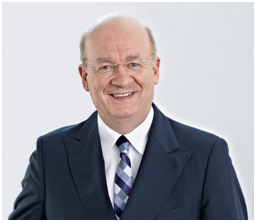
Wolfgang Wahlster is the Director of DFKI and a Professor of Computer Science at Saarland University. He has published more than 200 technical papers and 10 books on user modeling, multimodal user interfaces and instrumented environments. He is a Fellow of AAAI, ECCAI, and GI. In 2001, he received the German Future Prize from the President of Germany for his work on intelligent user interfaces. He is a member of the Royal Swedish Academy of Sciences and the German National Academy. In 2013, he received the IJCAI Donald Walker Distinguished Service Award for his substantial contributions, as well as his extensive service to the field of AI throughout his career.
Mark Billinghurst
Using AR to Create Empathic Experiences
Intelligent user interfaces have traditionally been used to create systems that respond intelligently to user input. However there is a recent trend towards Empathic Interfaces which are designed to go beyond understanding user input and to recognize emotional state and user feelings. In this presentation we explore how Augmented Reality (AR) can be used to convey that emotional state and so allow users to capture and share emotional experiences. In this way AR not only overlays virtual imagery on the real world, but also can create deeper understanding of user's experience at particular locations and points in time. The recent emergence of truly wearable systems, such as Google Glass, provide a platform for Empathic Communication using AR. Examples will be shown from research conducted at the HIT Lab NZ and other research organizations, and key areas for future research described.
Bio
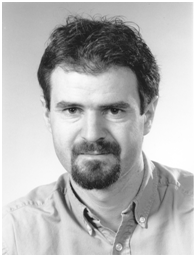
Professor Mark Billinghurst is Director of the Human Interface Technology Laboratory New Zealand (HIT Lab NZ) at the University of Canterbury where he leads research developing innovative computer interfaces that explore how virtual and real worlds can be merged. With a PhD from the University of Washington, he has previously worked at ATR Research Labs in Japan, the MIT Media Laboratory, Nokia and Google. He has won a number of awards including the 2013 IEEE VR Award for Technical Achievement in research and commercialization of Augmented Reality technology, and the 2012 ISMAR 10 Year Lasting Impact Award.